April 28, 2026 · 7 min read
Deck Staining vs. Sealing vs. Painting: Which Is Right?
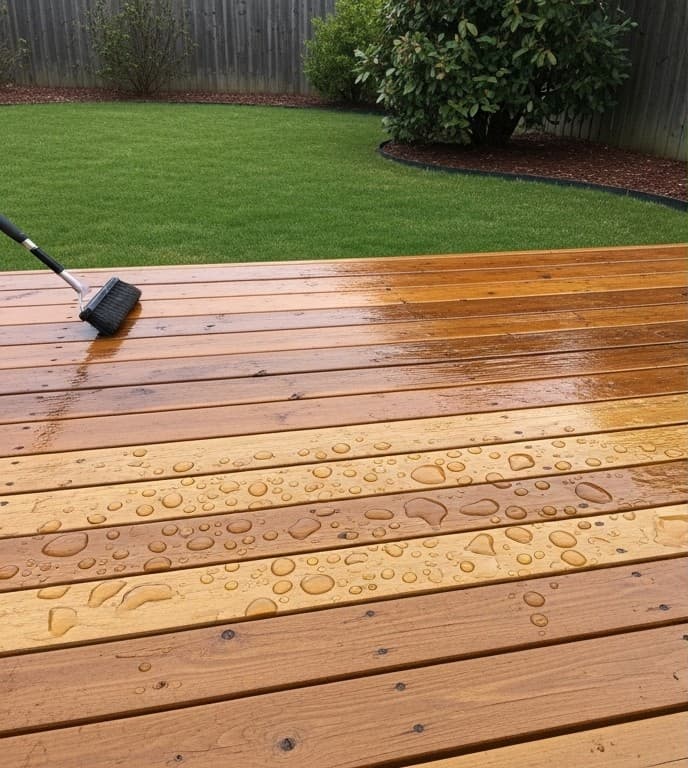
When it's time to protect a deck, homeowners in Kitchener-Waterloo usually land on three options: stain it, seal it, or paint it. They are not interchangeable, and choosing the wrong one can cost you years of life and a lot of money. Here's an honest, jargon-free breakdown of how each finish works, what it looks like, and when it's the right call.
First, what each one actually does. A sealer is a clear or lightly tinted protective coat. It waterproofs the wood and blocks moisture, but offers little to no UV protection, so the wood will still grey over time. A stain combines protection with colour and pigment, which is what blocks UV — the more pigment, the more sun protection and the longer it lasts. Paint is a thick, opaque film that sits on top of the wood, completely hiding the grain. Each sits at a different point on the same scale: from showing all the wood (sealer) to hiding all of it (paint), with stain in the middle.
Deck sealing: best for newer or premium wood. If you have a brand-new deck, beautiful cedar, or a hardwood like ipe that you want to show off in its natural colour, a clear sealer is often the right first move. It keeps water out and lets the wood breathe and age gracefully. The trade-off is UV: without pigment, the wood will gradually silver, and you'll be re-sealing more often — typically every two to three seasons. Sealing is also the right choice as a maintenance top-up over an existing stain that's still in good shape underneath.
Deck staining: the best all-round choice for our climate. For the vast majority of decks in Ontario, a quality penetrating stain is the sweet spot. You get real UV protection from the pigment, real moisture protection, and a finish that soaks into the wood rather than forming a film on top. That last part matters: because penetrating stain wears by fading rather than peeling, re-coating is straightforward — no stripping off failed flakes first. You also get a range of looks, from transparent (most grain shows) to semi-transparent (richer tone, grain still visible) to solid (maximum colour and protection, grain hidden). It is the finish we recommend most often, because it balances looks, protection, and easy maintenance better than the alternatives.
Deck painting: high colour, high commitment. Paint gives you the broadest colour range and hides imperfections in older wood. But on a horizontal, foot-trafficked, weather-exposed deck floor, paint is risky. Because it forms a film on top of the wood, moisture that gets underneath — from a crack, an edge, or the underside — lifts the paint and causes peeling and flaking. Once a painted deck starts to peel, the only fix is to strip it all off and start over, which is expensive and labour-intensive. Paint can work well on vertical surfaces like railings or a porch ceiling, but we rarely recommend it for a deck walking surface in our freeze-thaw climate.
The one-way-door problem. Here's a crucial point most homeowners don't hear until it's too late: these choices aren't equally reversible. You can almost always go from a sealer or a transparent stain to something more opaque later. But going back the other way — from solid stain or paint to a natural, transparent look — means aggressive stripping and sanding, and sometimes it's not fully possible at all. When in doubt, start lighter. It's far easier to add pigment next time than to take it away.
What about the wood you have? Pressure-treated lumber, the most common deck material in KW subdivisions, takes stain well once it has dried out and been properly prepped — solid or semi-transparent stain usually looks best on it. Cedar is gorgeous under a transparent or semi-transparent stain that lets the grain show. Older, weathered, or previously painted decks often need a solid stain or a full restoration to look their best. The right finish always depends on the species and condition of your specific deck, which is exactly what we assess on site.
Think about lifetime cost, not just today's price. The cheapest finish to apply isn't always the cheapest to own. A clear sealer costs less up front but needs redoing more often, while a quality stain costs a bit more now and stretches the interval between refreshes. Paint can look great on day one but carries the highest long-term risk: once it starts peeling, you're paying to strip the entire deck before you can refinish it. When you compare options, factor in how often each will need redoing over the next ten years and how much prep the next coat will demand — that's the number that actually hits your wallet.
How we help you decide. During a free on-site quote, we look at your wood, its condition, its sun and water exposure, and the look you're after, then recommend the finish that will look best and last longest — not the one that's easiest to sell. Sometimes that's a rich semi-transparent stain; sometimes it's a simple seal coat; occasionally it's a solid stain to rescue a tired deck. Whatever we recommend comes with proper prep and our written two-year workmanship warranty, because the best finish in the world still fails without the right preparation underneath.